
We are using AI privately—why deny it publicly?
It's time for transparency—face it, admit it, teach it: AI is already here

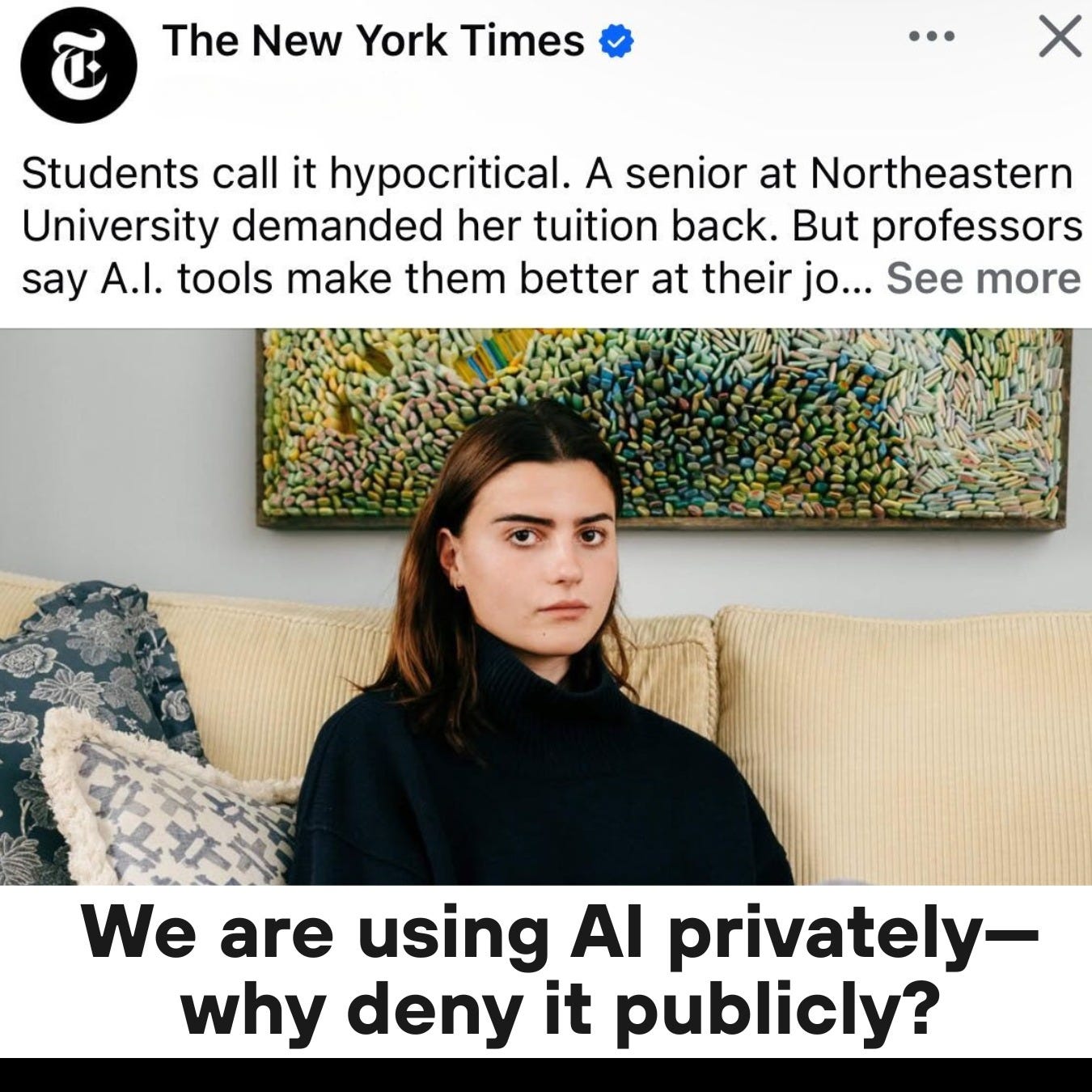
AI is not tomorrow’s problem—it’s today’s reality. Yet many of us use it privately, then refuse to admit it publicly.
It's a thought-provoking question for academics.
It’s time to stop hiding our use of AI. Let’s own it publicly, build ethical guardrails, and prepare tomorrow’s scholars today.
A recently published article in the NYT revealed the actual story. Could you read the full article here?
I think it stops now.
Here’s what we must do:
1. Acknowledge its role
Professors at well-known universities quietly fed ChatGPT their lecture notes—while telling students not to use it. Hypocrisy breeds distrust.
Last semester, six out of ten faculty at my university admitted to using ChatGPT to refine their lecture slides—but none disclosed it in class.”
Stat: In a 2024 EDUCAUSE survey, 42% of higher-ed instructors reported using AI tools like ChatGPT in their teaching.
Why it matters: Secrecy breeds distrust. When professors quietly feed AI their materials but publicly ban student use, the message is muddled and morale suffers.
2. Create clear guidelines
Every department needs an AI policy: when to use it, how to cite it, and who reviews the output.
Every department needs an AI policy that outlines:
When AI can be used (e.g., drafting, citation checks)
How to cite AI-generated content
Who reviews AI outputs for accuracy and bias
Tip: Form a cross-campus AI task force—include faculty, librarians, and students—to draft and periodically update these guidelines.
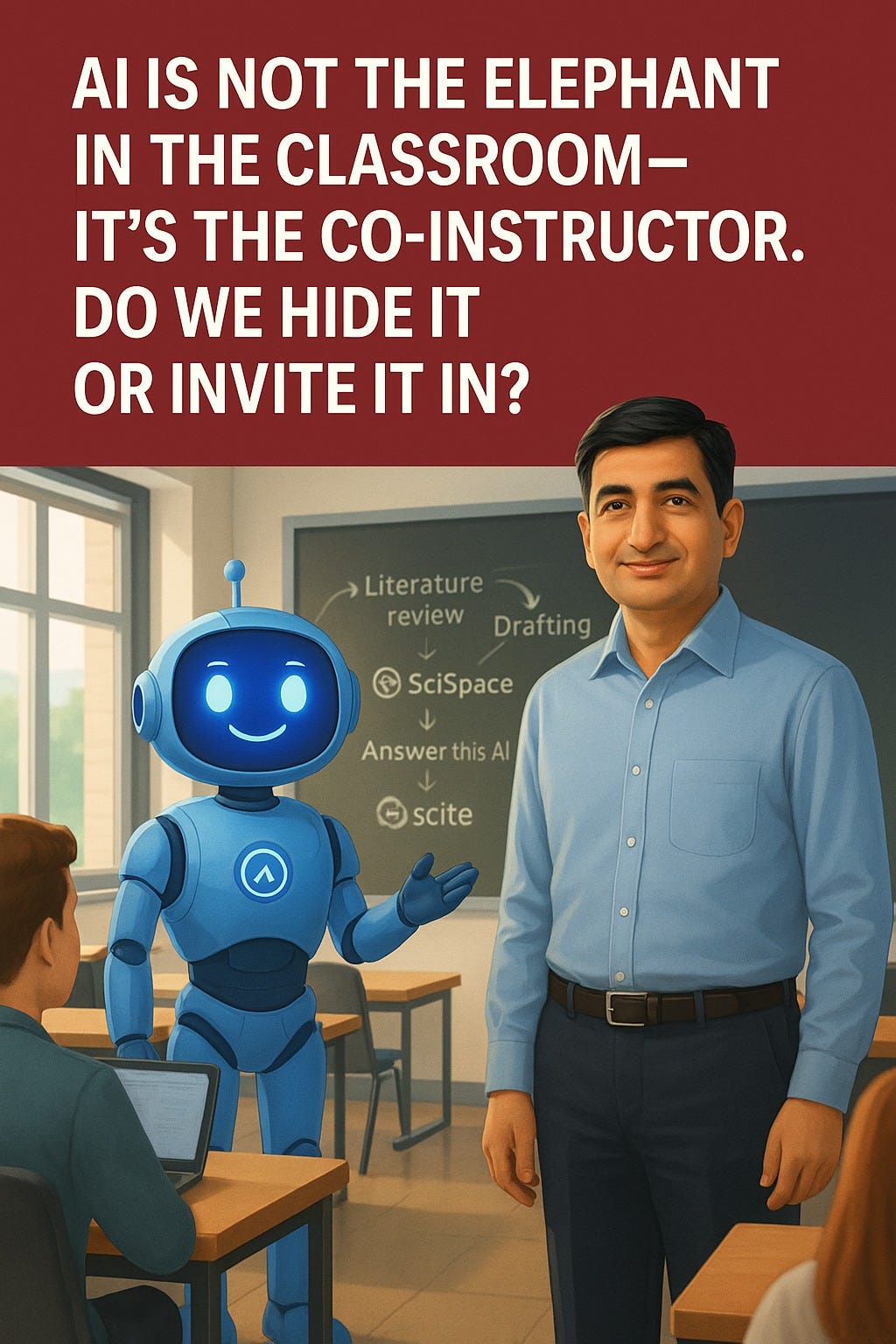
“AI isn’t the elephant in the classroom—it’s the co-instructor. Do we hide it or invite it in?”
3. Use it ethically
AI should enhance, not replace, human insight. Let it draft or proof, but you give the feedback.
Let tools draft or proof material, but you provide the critical feedback and final sign-off.
Guard against “copy-paste reliance”: require students to reflect on what the AI did well—and where it erred.
4. Teach responsible use
Show students how to leverage tools like SciSpace, Answerthis.ai or Paperpal for literature review and data analysis—then critique and refine together.
Food for thought? AI in classrooms: hidden tool or open ally?5. Foster open dialogue
Invite students into the conversation. Encourage them to flag mistakes and question your process. Invite students into the conversation—don’t leave them guessing.
Host sessions on AI ethics.
Create an AI-use feedback channel where learners flag mistakes or ask questions.
Showcase “AI success stories” and “AI pitfalls” in your classroom newsletter.
Vote now and share your experience in the comments!
Key Takeaway
AI will reshape teaching and research—only if we stop hiding behind closed doors.
Let’s own our use of these tools publicly, build ethical guardrails, and prepare the next generation to do the same.
Join the Conversation
Reply to this email or drop a “🤖” in our discussion forum to share how your department is (or isn’t) addressing AI head-on.